


 Dr. Paddy Ryan, USA

Info
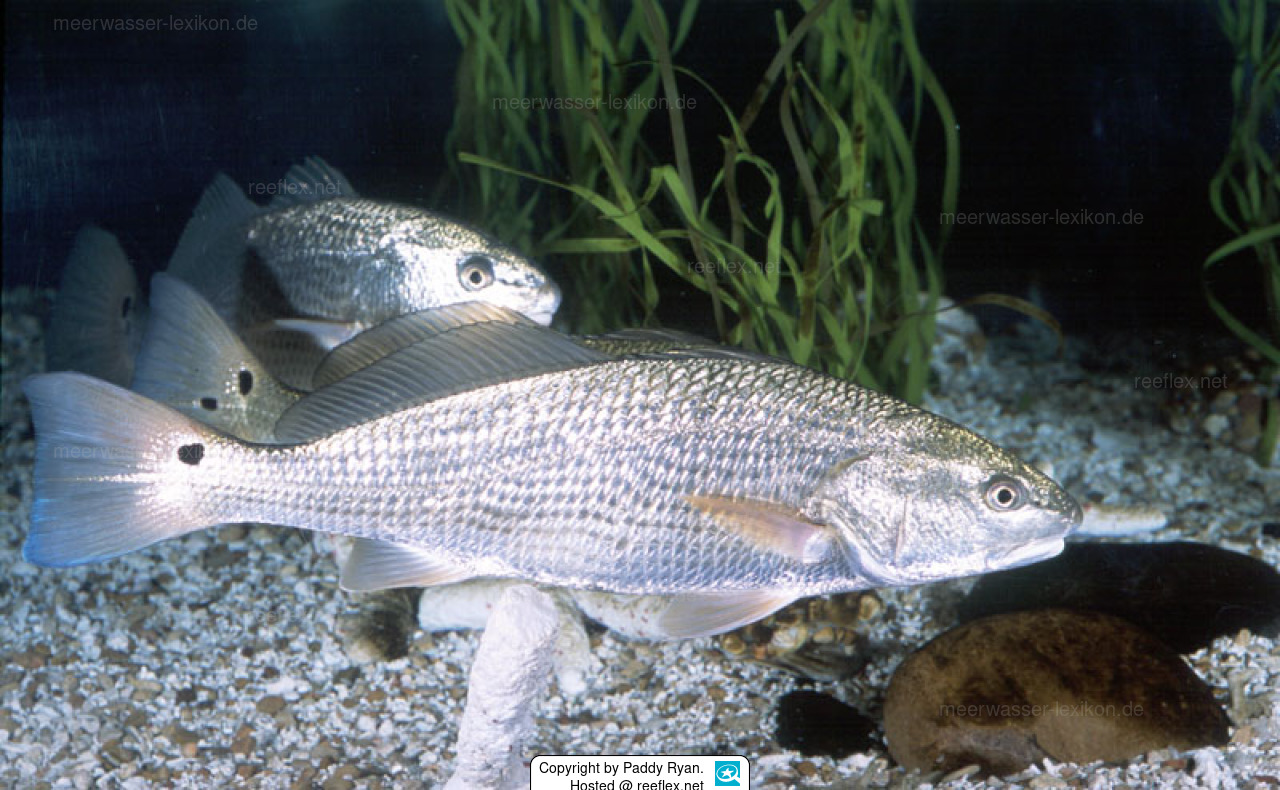
Sciaenops ocellatus is a coastal wrasse with dark copper to light silver coloring and a distinct eye spot on its tail.
The red drum is highly tolerant of fluctuations in water temperature and salinity, allowing it to thrive in a wide variety of habitats, from surf zones and seagrass beds to river mouths and estuaries, where it can be observed either alone or in schools.
The name “drummer” comes from the drumming or croaking sound the fish can produce using its swim bladder and abdominal muscles.
This species is primarily caught using trawl nets, traps, and gillnets and is considered a highly prized, tasty food fish.
Recreational anglers also catch the species in large quantities, as it can be used fresh or frozen; it is eaten pan-fried, grilled, and baked.
Originally, the Sciaenops ocellatus was native to the waters from Massachusetts on the U.S. East Coast to northern Mexico, including South Florida; all other locations listed in the profile result from the species having been introduced there.
Aquaculture of this species is well established in many countries, though only fish up to a maximum size of 50 cm are typically raised.
Synonyms:
Lutjanus triangulum Lacepède, 1802 · unaccepted
Perca ocellata Linnaeus, 1766 · unaccepted
Sciaenops ocellata (Linnaeus, 1766) · unaccepted (misspelling)
The red drum is highly tolerant of fluctuations in water temperature and salinity, allowing it to thrive in a wide variety of habitats, from surf zones and seagrass beds to river mouths and estuaries, where it can be observed either alone or in schools.
The name “drummer” comes from the drumming or croaking sound the fish can produce using its swim bladder and abdominal muscles.
This species is primarily caught using trawl nets, traps, and gillnets and is considered a highly prized, tasty food fish.
Recreational anglers also catch the species in large quantities, as it can be used fresh or frozen; it is eaten pan-fried, grilled, and baked.
Originally, the Sciaenops ocellatus was native to the waters from Massachusetts on the U.S. East Coast to northern Mexico, including South Florida; all other locations listed in the profile result from the species having been introduced there.
Aquaculture of this species is well established in many countries, though only fish up to a maximum size of 50 cm are typically raised.
Synonyms:
Lutjanus triangulum Lacepède, 1802 · unaccepted
Perca ocellata Linnaeus, 1766 · unaccepted
Sciaenops ocellata (Linnaeus, 1766) · unaccepted (misspelling)

