


 Pensoft Zoosystematics and Evolution

Info
Anyone who is afraid of spiders need not fear woodlice, because—despite their name—they are not spiders (Arachnida), but chelicerates (Chelicerata)!
Despite several scientific sources, we were unfortunately unable to find any information on the size of Cilunculus frontosus.
Given the species’ deep-sea distribution and the high cost of conducting intensive searches for these animals at depths ranging from 500 to 1,300 meters, reliable data is more likely to come from incidental catches during trawl operations—provided these delicate creatures survive the journey from the depths to the ship’s deck intact.
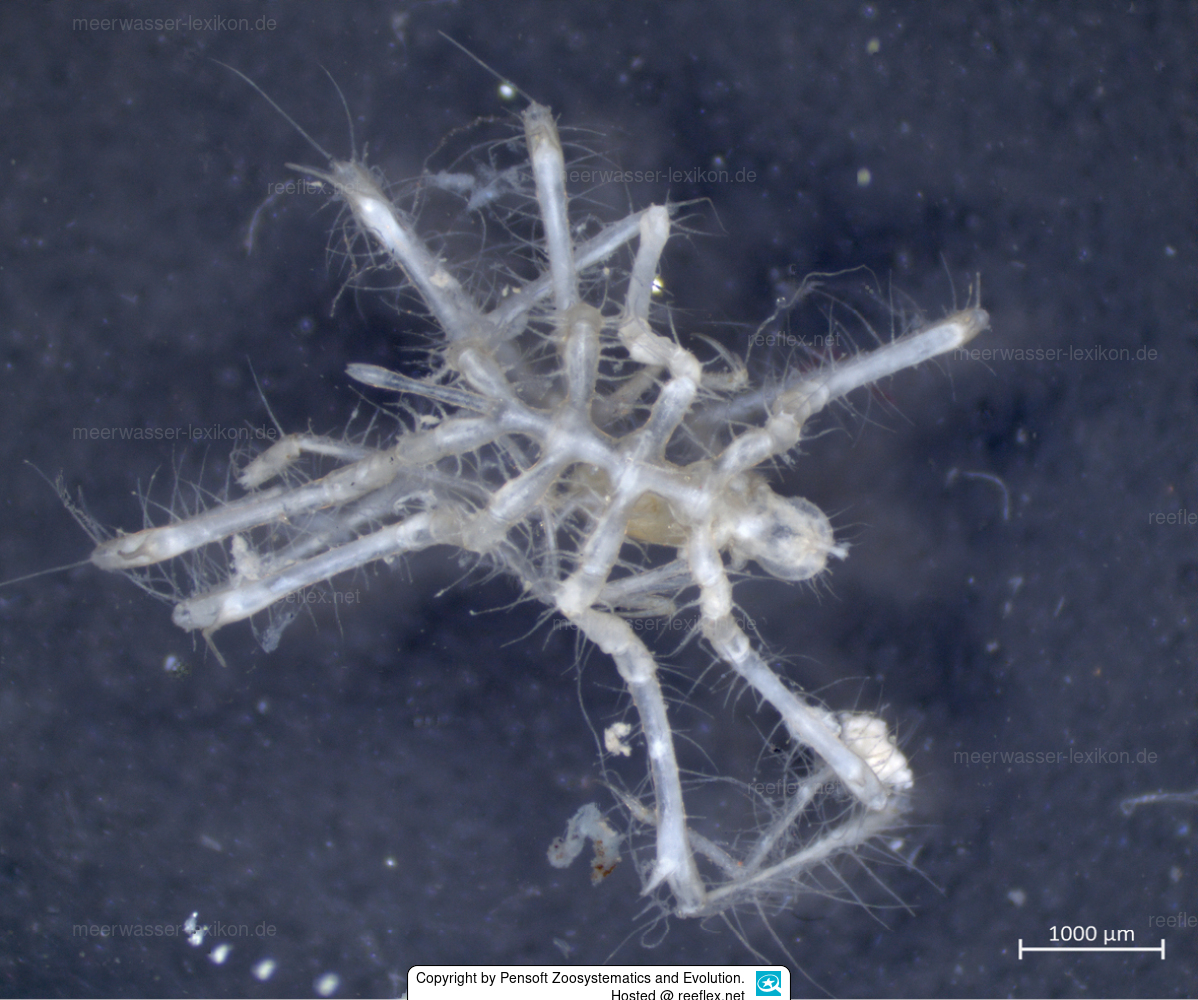
The sea spider pictured here is a male that was mounted on microscope slides.
Scientific reference:
Bakker, Hannco & Sabroux, Romain. (2026). Collections unravelled: Loman’s Pycnogonids.
Zoosystematics and Evolution. 102. 199-216. 10.3897/zse.102.174505.
CC BY 4.0
Despite several scientific sources, we were unfortunately unable to find any information on the size of Cilunculus frontosus.
Given the species’ deep-sea distribution and the high cost of conducting intensive searches for these animals at depths ranging from 500 to 1,300 meters, reliable data is more likely to come from incidental catches during trawl operations—provided these delicate creatures survive the journey from the depths to the ship’s deck intact.
The sea spider pictured here is a male that was mounted on microscope slides.
Scientific reference:
Bakker, Hannco & Sabroux, Romain. (2026). Collections unravelled: Loman’s Pycnogonids.
Zoosystematics and Evolution. 102. 199-216. 10.3897/zse.102.174505.
CC BY 4.0

