Anzeige
Fauna Marin GmbH Mrutzek Meeresaquaristik Fauna Marin GmbH Kölle Zoo Aquaristik BAS

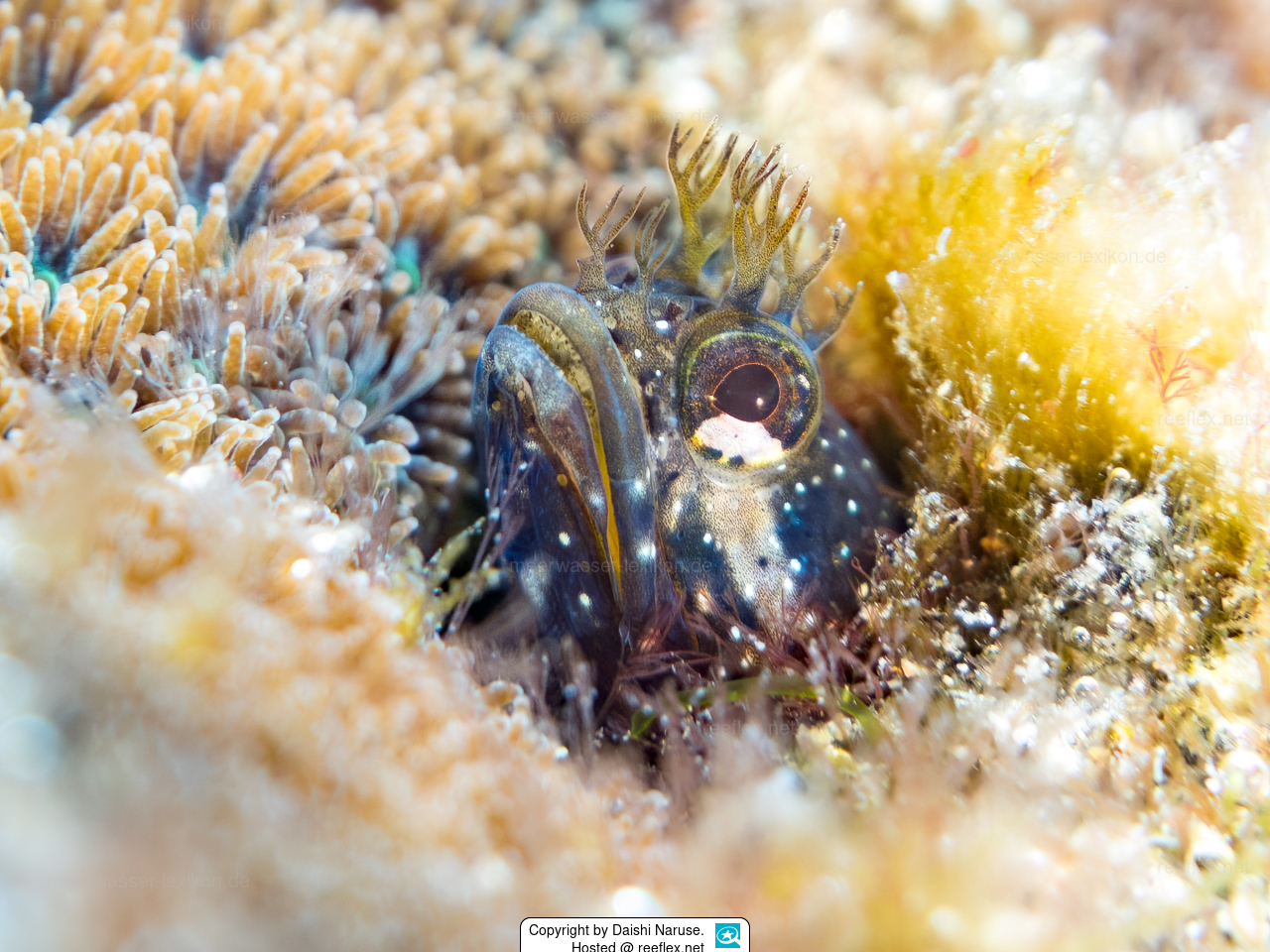
Neoclinus okazakii Neoclinus okazakii fringehead

Neoclinus okazakii is commonly referred to as Neoclinus okazakii fringehead. Difficulty in the aquarium: There are no reports available yet that this animal has already been kept in captivity successfully. Toxicity: Toxic hazard unknown.


Profilbild Urheber Daishi Naruse, Japan

Foto: Strand von Hirizo, Süd-Izu, Halbinsel Izu, Präfektur Shizuoka, Japan

/ 19. Juli 2026
Courtesy of the author Daishi Naruse, Japan . Please visit www.flickr.com for more information.

Uploaded by AndiV.

Image detail


Profile

lexID:
18519 
AphiaID:
Scientific:
Neoclinus okazakii 
German:
Okazakiis Fransenkopf 
English:
Neoclinus Okazakii Fringehead 
Category:
 
Family tree:
Animalia (Kingdom) > Chordata (Phylum) > Teleostei (Class) > Blenniiformes (Order) > Chaenopsidae (Family) > Neoclinus (Genus) > okazakii (Species) 
Initial determination:
Fukao, 1987 
Occurrence:
Russland, Croatia, Japan, Northwest Pacific, Okinawa 
Marine Zone:
Intertidal (Eulittoral), intertidal zone between the high and low tide lines characterized by the alternation of low and high tide down to 15 meters 
Sea depth:
0,5 - 12 Meter 
Habitats:
Demersal (bottom-dwelling fish), In living corals, Living in or on tubes of tubeworms, Marine / Salt Water, Reef holes, Tubeworm housing 
Size:
6,2 cm 
Temperature:
57.2 °F - 82.4 °F (14°C - 28°C) 
Food:
Amphipods, Carnivore, Copepods, Daphnia salina, Invertebrates, Zooplankton 
Difficulty:
There are no reports available yet that this animal has already been kept in captivity successfully 
Offspring:
Not available as offspring 
Toxicity:
Toxic hazard unknown 
CITES:
Not evaluated 
Red List:
Least concern (LC)  
Related species at
Catalog of Life
:
 
Author:
Publisher:
Meerwasser-Lexikon.de
Created:
Last edit:
2026-08-07 16:02:25 

Info

A quick glance at Neoclinus okazakii’s head explains its common name, “Fringehead,” without needing further explanation.

The pike blenny inhabits rocky reefs and coral reefs in areas with moderate wave action.

Males of this species grow slightly larger than females, reaching a maximum of 6.2 cm, while females can reach around 4.5 cm.

Etymology:
The species name “okazakii” honors Dr. Toshio Okazaki, who performed the electrophoresis and thus contributed to the identification of this species.
Dr. Toshio Okazaki was a Japanese geneticist at Yamazaki University of Animal Health Technology.

Pictures

Commonly


Husbandry know-how of owners

0 husbandary tips from our users available
Show all and discuss