




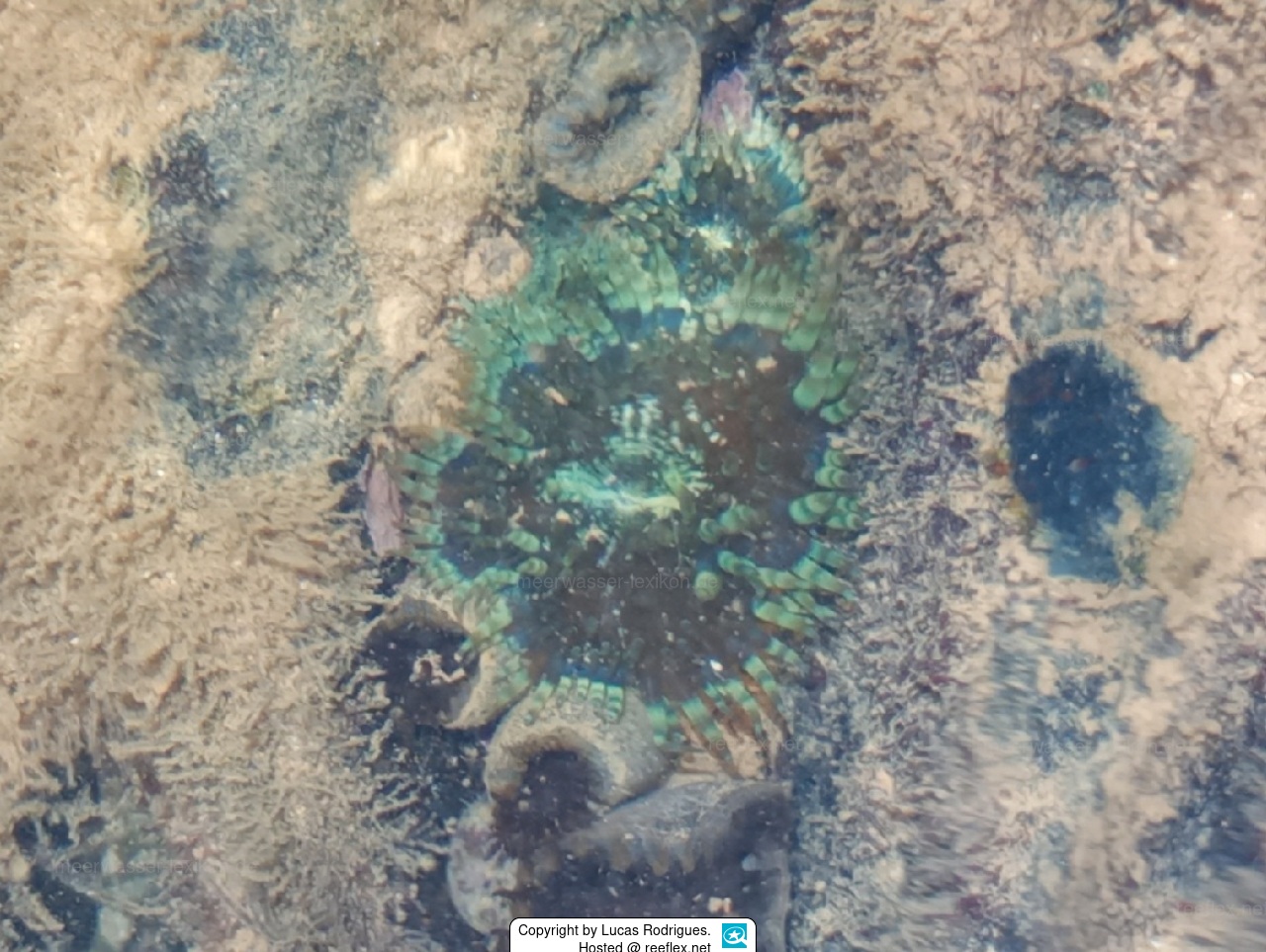
 Lucas Rodrigues, Brasilien


Info
Bellactis ilkalyseae is a small sea anemone found in very shallow rocky areas; however, the species was first described based solely on preserved specimens, so the only size measurements available online are those of the preserved specimens (2.2 cm in height and 1 cm in diameter).
The size of 3 cm that we calculated is based on Figure 17 from Plazi.
The scientific literature notes that Bellactis ilkalyseae is endemic to the east coast of Brazil; however, there are confirmed findings from Belize, Panama, and Guadeloupe.
Living specimens have a whitish, translucent column; the tentacles have yellow tips; and the coloration of the oral disc is gray-blue with irregular spots.
The sea anemone has up to ~204 smooth tentacles that taper toward the tips.
Bellactis ilkalyseae occurs in colonies; longitudinal fission is one of the most common forms of asexual reproduction in this sea anemone and leads to rapid population growth.
Since the anemones are clones with identical DNA, the question arises as to whether the species responds to changes in its environment and whether the colonies are capable of adapting.
Etymology:
The name is a Latinized patronym in honor of Ilka Lyse Costa (who is frequently cited or acknowledged in regional Brazilian studies and collections alongside Dubes’ taxonomic works) and is composed of her first names, Ilka Lyse, and the Latinized genitive suffix -ae (which means “of” or indicates that the name honors a woman).
Synonym: Bellactis ilkalysae · unaccepted
The size of 3 cm that we calculated is based on Figure 17 from Plazi.
The scientific literature notes that Bellactis ilkalyseae is endemic to the east coast of Brazil; however, there are confirmed findings from Belize, Panama, and Guadeloupe.
Living specimens have a whitish, translucent column; the tentacles have yellow tips; and the coloration of the oral disc is gray-blue with irregular spots.
The sea anemone has up to ~204 smooth tentacles that taper toward the tips.
Bellactis ilkalyseae occurs in colonies; longitudinal fission is one of the most common forms of asexual reproduction in this sea anemone and leads to rapid population growth.
Since the anemones are clones with identical DNA, the question arises as to whether the species responds to changes in its environment and whether the colonies are capable of adapting.
Etymology:
The name is a Latinized patronym in honor of Ilka Lyse Costa (who is frequently cited or acknowledged in regional Brazilian studies and collections alongside Dubes’ taxonomic works) and is composed of her first names, Ilka Lyse, and the Latinized genitive suffix -ae (which means “of” or indicates that the name honors a woman).
Synonym: Bellactis ilkalysae · unaccepted

