

 De Jong Marinelife, Holland


Info
Favites pentagona (Esper, 1790)
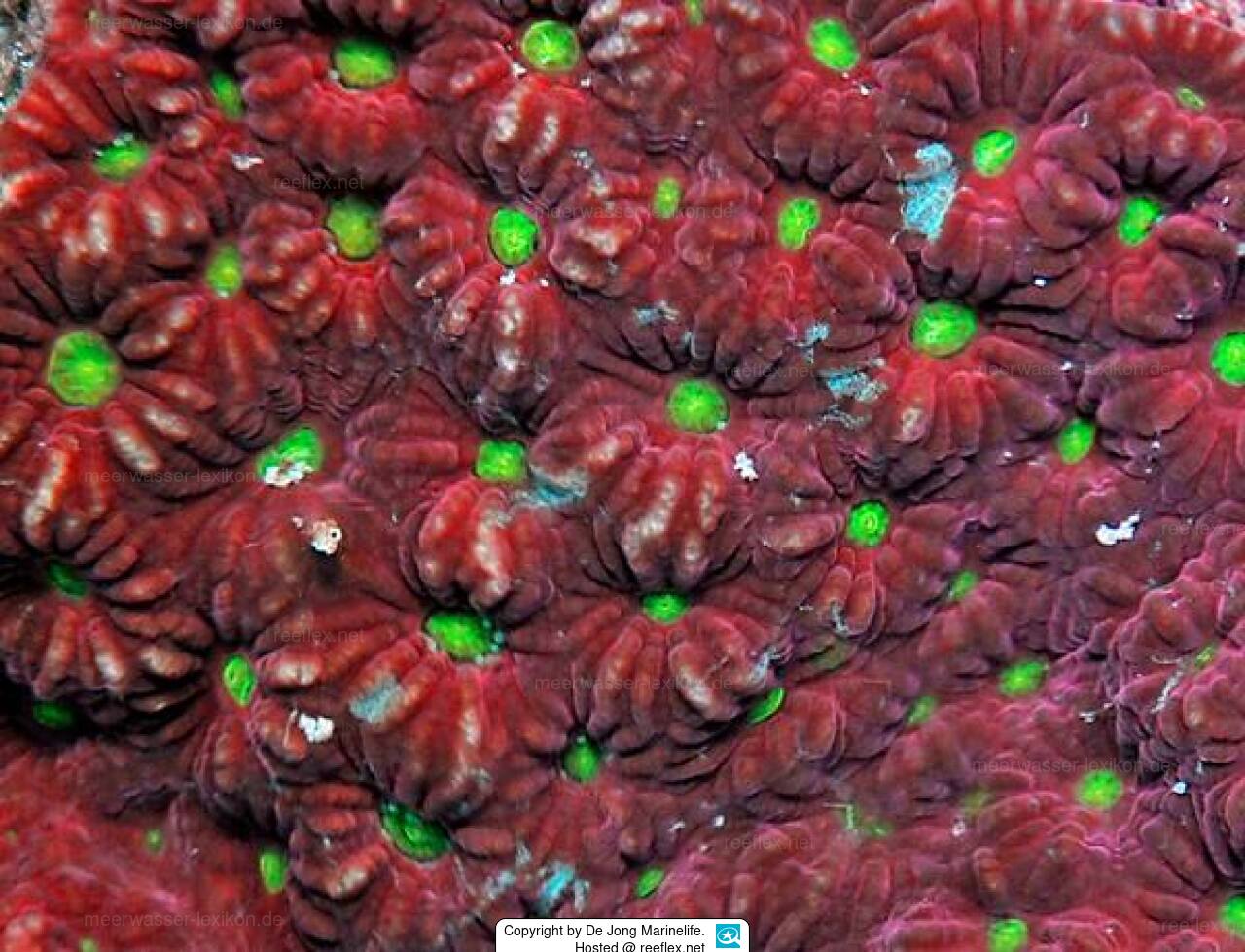
Description: Colonies are submassive to encrusting, sometimes forming irregular columns. They commonly exceed one metre across. Corallites are thin walled and angular. Septa are few in number. Paliform lobes are well developed, commonly forming a conspicuous crown.
Color: Often brightly coloured, brown or red, commonly with green oral discs.
Habitat:
Abundance: Sometimes common.
Similar Species: Favites bestae and Favites micropentagona. The paliform crown makes this species Goniastrea-like.
Synonymised names
Aphrastraea deformis (Lamarck, 1816) · unaccepted > junior subjective synonym (misspelling)
Aphrastrea deformis (Lamarck, 1816) · unaccepted > junior subjective synonym
Astraea (Fissicella) deformis Lamarck, 1816 · unaccepted > junior subjective synonym
Astraea (Fissicella) pentagona (Esper, 1790) · unaccepted > superseded combination
Astraea deformis Lamarck, 1816 · unaccepted > junior subjective synonym
Astraea pentagona (Esper, 1790) · unaccepted > superseded combination
Astrea deformis Lamarck, 1816 · unaccepted > junior subjective synonym
Favia adduensis Gardiner, 1904 · unaccepted > junior subjective synonym
Favia pentagona (Esper, 1790) · unaccepted > superseded combination
Favites gailei Chevalier, 1971 · unaccepted > junior subjective synonym
Favites parvicella Nemenzo, 1959 · unaccepted > junior subjective synonym
Favites pentagona var. tenuis Umbrove, 1946 † · unaccepted > junior subjective synonym
Goniastrea rudis Milne Edwards & Haime, 1849 · unaccepted > junior subjective synonym
Madrepora pentagona Esper, 1790 · unaccepted > superseded combination (basionym)
Matrepora pentagona (Esper, 1790) · unaccepted > superseded combination
Plesiastrea haeckeli Brüggemann, 1877 · unaccepted > junior subjective synonym
Prionastraea gibbosissima Milne Edwards & Haime, 1849 · unaccepted > junior subjective synonym
Prionastraea pentagona (Esper, 1790) · unaccepted > superseded combination
Prionastrea gibbosissima (Milne Edwards & Haime, 1849) · unaccepted > junior subjective synonym
Prionastrea pentagona (Esper, 1790) · unaccepted > superseded combination (basionym)
Stephanocoenia maldivensis Gardiner, 1904 · unaccepted > junior subjective synonym
Trachyphyllia pentagona (Esper, 1790) · unaccepted > superseded combination
Description: Colonies are submassive to encrusting, sometimes forming irregular columns. They commonly exceed one metre across. Corallites are thin walled and angular. Septa are few in number. Paliform lobes are well developed, commonly forming a conspicuous crown.
Color: Often brightly coloured, brown or red, commonly with green oral discs.
Habitat:
Abundance: Sometimes common.
Similar Species: Favites bestae and Favites micropentagona. The paliform crown makes this species Goniastrea-like.
Synonymised names
Aphrastraea deformis (Lamarck, 1816) · unaccepted > junior subjective synonym (misspelling)
Aphrastrea deformis (Lamarck, 1816) · unaccepted > junior subjective synonym
Astraea (Fissicella) deformis Lamarck, 1816 · unaccepted > junior subjective synonym
Astraea (Fissicella) pentagona (Esper, 1790) · unaccepted > superseded combination
Astraea deformis Lamarck, 1816 · unaccepted > junior subjective synonym
Astraea pentagona (Esper, 1790) · unaccepted > superseded combination
Astrea deformis Lamarck, 1816 · unaccepted > junior subjective synonym
Favia adduensis Gardiner, 1904 · unaccepted > junior subjective synonym
Favia pentagona (Esper, 1790) · unaccepted > superseded combination
Favites gailei Chevalier, 1971 · unaccepted > junior subjective synonym
Favites parvicella Nemenzo, 1959 · unaccepted > junior subjective synonym
Favites pentagona var. tenuis Umbrove, 1946 † · unaccepted > junior subjective synonym
Goniastrea rudis Milne Edwards & Haime, 1849 · unaccepted > junior subjective synonym
Madrepora pentagona Esper, 1790 · unaccepted > superseded combination (basionym)
Matrepora pentagona (Esper, 1790) · unaccepted > superseded combination
Plesiastrea haeckeli Brüggemann, 1877 · unaccepted > junior subjective synonym
Prionastraea gibbosissima Milne Edwards & Haime, 1849 · unaccepted > junior subjective synonym
Prionastraea pentagona (Esper, 1790) · unaccepted > superseded combination
Prionastrea gibbosissima (Milne Edwards & Haime, 1849) · unaccepted > junior subjective synonym
Prionastrea pentagona (Esper, 1790) · unaccepted > superseded combination (basionym)
Stephanocoenia maldivensis Gardiner, 1904 · unaccepted > junior subjective synonym
Trachyphyllia pentagona (Esper, 1790) · unaccepted > superseded combination


