

 ResearchGate


Info
The amphipod Iphimedia trigona was discovered near Kashima Island, Ehime Prefecture, Japan, at a water depth of 20 meters on a bryozoan.
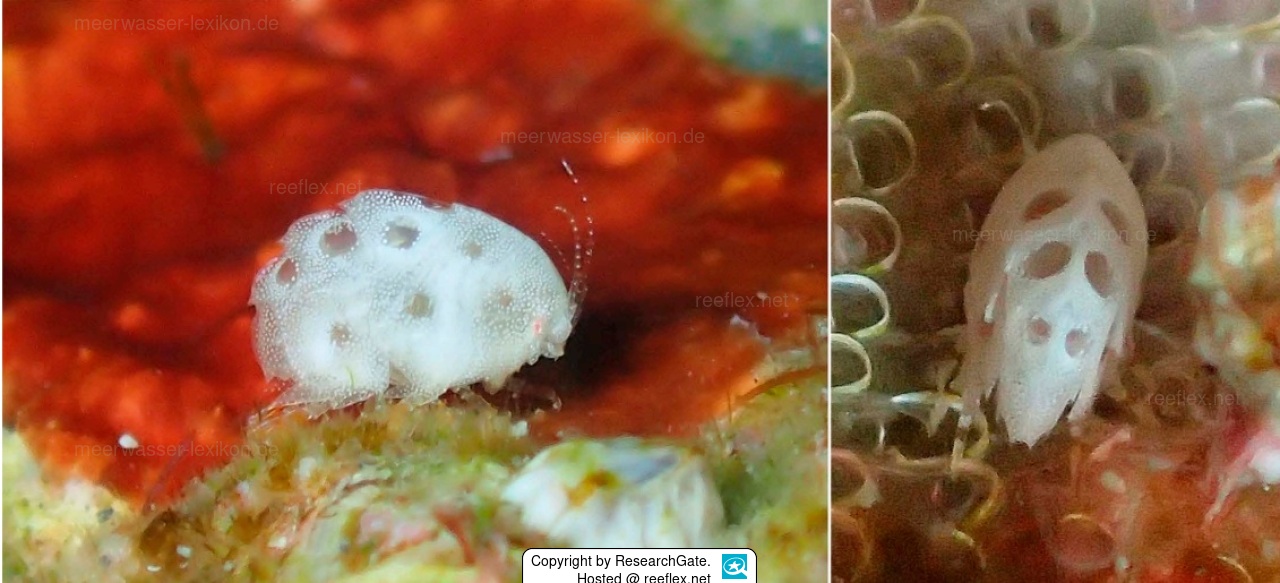
Coloration: Based on a female specimen of unknown size (Fig. 15), the body is snow-white, with 3 rounded, translucent spots and 4 indistinct, translucent spots when viewed from the side. The eyes are pink.
The rounded spots are clearly visible from the dorsal view. In the ocean, this copepod plays an important role as a source of protein for larger carnivores within the food chain.
Etymology: The species name “trigona” is derived from the Latin adjective “trigonus” (= triangular), referring to the shape of the posteroventral projection of pereonite 7.
Reference:
Ariyama, Hiroyuki. (2026). Three New Species of the Genus Iphimedia from Japan (Crustacea: Amphipoda: Iphimediidae). Species Diversity. 31. 43–62. DOI: 10.12782/specdiv.31.43. License: CC BY 4.0
Coloration: Based on a female specimen of unknown size (Fig. 15), the body is snow-white, with 3 rounded, translucent spots and 4 indistinct, translucent spots when viewed from the side. The eyes are pink.
The rounded spots are clearly visible from the dorsal view. In the ocean, this copepod plays an important role as a source of protein for larger carnivores within the food chain.
Etymology: The species name “trigona” is derived from the Latin adjective “trigonus” (= triangular), referring to the shape of the posteroventral projection of pereonite 7.
Reference:
Ariyama, Hiroyuki. (2026). Three New Species of the Genus Iphimedia from Japan (Crustacea: Amphipoda: Iphimediidae). Species Diversity. 31. 43–62. DOI: 10.12782/specdiv.31.43. License: CC BY 4.0

