


 Dr. Robert A. Patzner, Österreich


Info
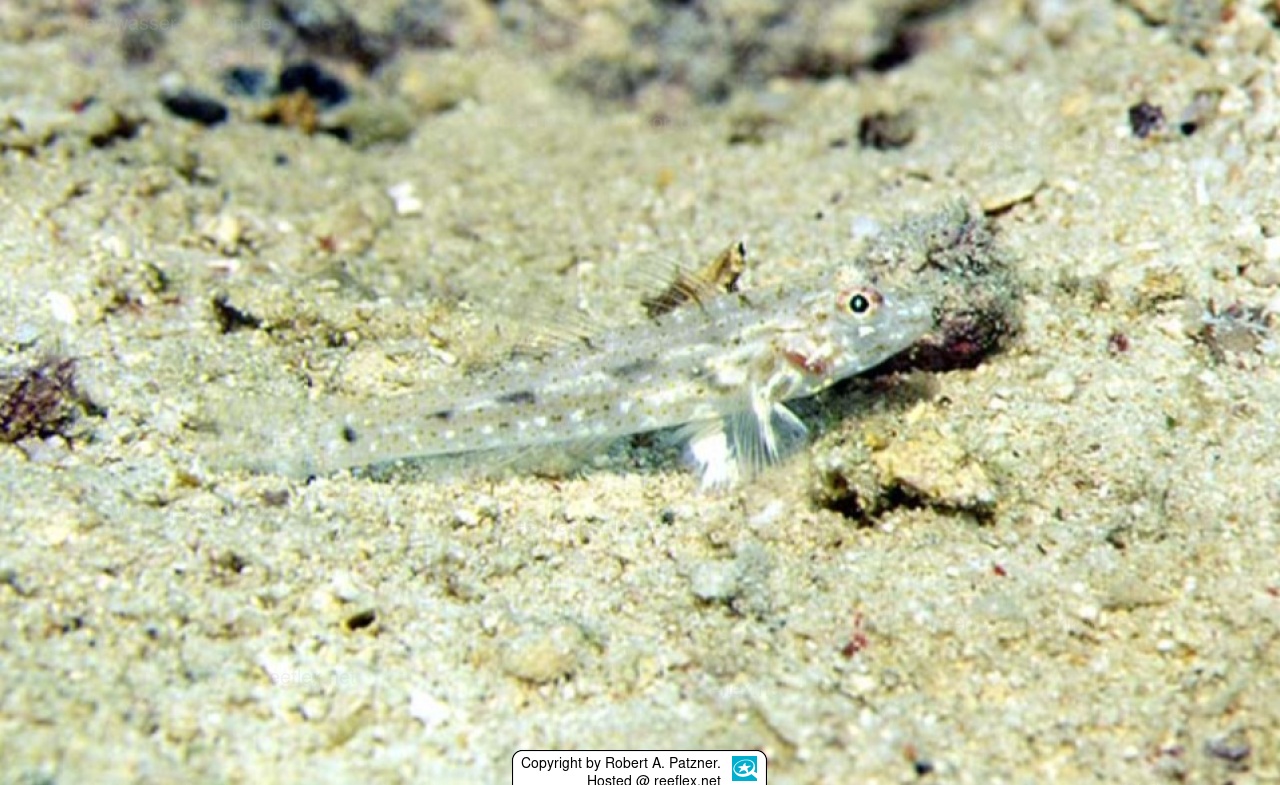
Fusigobius gracilis, the slender sand goby, was first described by Dr. John (Jack) Randall in 2001; this goby is found primarily on sandy and gravelly bottoms near reefs.
The goby is translucent but later turns opaque white.
The basal and shoulder spots are black; there is a row of 6 dark spots along the midline with orange-yellow centers;
the head and body are covered with numerous very small orange-yellow spots, most of which have blackish centers.
The spots on the head are arranged in diagonal rows, one of which runs from the eye across the lips; a diffuse dark spot is visible below the eye.
The dorsal and caudal fins are translucent, finely speckled with white, and have scattered small orange-yellow spots.
An orange line with a dark center extends from the outer part of the first membrane of the first dorsal fin to the base of the second spine.
The anal and pelvic fins are white; the pectoral fins have whitish rays and transparent membranes.
Etymology: This species was named after the Latin word “gracilis” because it is the slimmest species in the genus.
The goby is translucent but later turns opaque white.
The basal and shoulder spots are black; there is a row of 6 dark spots along the midline with orange-yellow centers;
the head and body are covered with numerous very small orange-yellow spots, most of which have blackish centers.
The spots on the head are arranged in diagonal rows, one of which runs from the eye across the lips; a diffuse dark spot is visible below the eye.
The dorsal and caudal fins are translucent, finely speckled with white, and have scattered small orange-yellow spots.
An orange line with a dark center extends from the outer part of the first membrane of the first dorsal fin to the base of the second spine.
The anal and pelvic fins are white; the pectoral fins have whitish rays and transparent membranes.
Etymology: This species was named after the Latin word “gracilis” because it is the slimmest species in the genus.


