


 AndiV
AndiV


Info
Burgess, 1974
Flameback Angelfish, also known as the Flameback Pygmy Angelfish, Fireball Angelfish and Brazilian Flameback Angelfish and is very often confused with the African Flameback Angelfish (Centropyge acanthops).
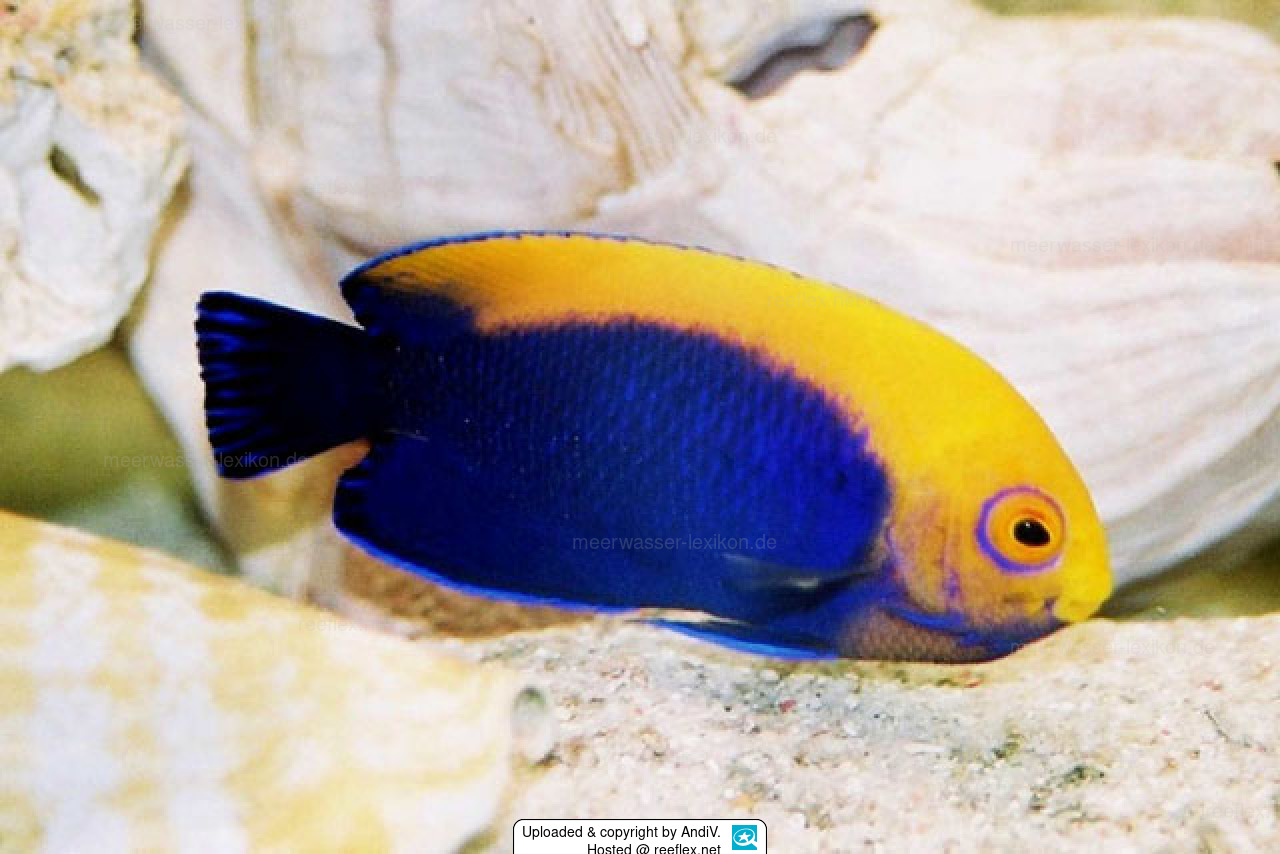
Flameback Angelfish originates in the Caribbean and can be distinguished from its African counterpart by its dark blue caudal fin (tail). The body is a brilliant to dark blue with a dorsal swatch of yellow-orange extending from the nose to the end including the dorsal fin. The eyes are large and circumscribed in blue.
The Flameback Angelfish can damage reef systems since it is prone to nip at stony and soft corals (sessile invertebrates) and clam mantles. It requires a larger tank with multiple hiding places and plenty of live rock for grazing.
The diet should include marine algae, angelfish preparations, mysid or frozen shrimp, and other high-quality meaty foods.
Sex and mating
The $lat are female from birth. If two fish are put together, then the more dominant animal becomes the male (=protogyne hermaphrodite).
It is best to put two fish of different sizes at the same time. If a fish is already present, then the new fish should be either much smaller or larger. If a larger fish is added, which would be an advantage, then the internal aggression is not as pronounced. The difference in size can be an advantage when pairing up, but there will still be scuffles until the sexing is complete.
In nature,dwarf emperors live in pairs or in harem groups, i.e., one male with several females, usually among coral reefs.
Reefsafe
Anyone who purchases a $lat must expect that this LPS will nibble on or damage SPS corals, giant clams, and gorgonians. Of course, there may be differences depending on the individual animal, which is repeatedly reported in many forums. In terms of its general diet, $lat feeds mainly on algae, small invertebrates, and sponges. Nibbling is in the fish's genes, so it is just as common in captive-bred fish as it is in wild-caught fish. Perhaps not quite as strongly.
Keeping the fish in pairs can sometimes help, but it can also cause even more damage by imitating the partner.
If the coral is growing very well or has reached a certain size, the damage caused by nibbling should be tolerable.
Synonyms:
Centropyge aurantanota Burgess, 1974
Centropyge aurantonota Burgess, 1974
Flameback Angelfish, also known as the Flameback Pygmy Angelfish, Fireball Angelfish and Brazilian Flameback Angelfish and is very often confused with the African Flameback Angelfish (Centropyge acanthops).
Flameback Angelfish originates in the Caribbean and can be distinguished from its African counterpart by its dark blue caudal fin (tail). The body is a brilliant to dark blue with a dorsal swatch of yellow-orange extending from the nose to the end including the dorsal fin. The eyes are large and circumscribed in blue.
The Flameback Angelfish can damage reef systems since it is prone to nip at stony and soft corals (sessile invertebrates) and clam mantles. It requires a larger tank with multiple hiding places and plenty of live rock for grazing.
The diet should include marine algae, angelfish preparations, mysid or frozen shrimp, and other high-quality meaty foods.
Sex and mating
The $lat are female from birth. If two fish are put together, then the more dominant animal becomes the male (=protogyne hermaphrodite).
It is best to put two fish of different sizes at the same time. If a fish is already present, then the new fish should be either much smaller or larger. If a larger fish is added, which would be an advantage, then the internal aggression is not as pronounced. The difference in size can be an advantage when pairing up, but there will still be scuffles until the sexing is complete.
In nature,dwarf emperors live in pairs or in harem groups, i.e., one male with several females, usually among coral reefs.
Reefsafe
Anyone who purchases a $lat must expect that this LPS will nibble on or damage SPS corals, giant clams, and gorgonians. Of course, there may be differences depending on the individual animal, which is repeatedly reported in many forums. In terms of its general diet, $lat feeds mainly on algae, small invertebrates, and sponges. Nibbling is in the fish's genes, so it is just as common in captive-bred fish as it is in wild-caught fish. Perhaps not quite as strongly.
Keeping the fish in pairs can sometimes help, but it can also cause even more damage by imitating the partner.
If the coral is growing very well or has reached a certain size, the damage caused by nibbling should be tolerable.
Synonyms:
Centropyge aurantanota Burgess, 1974
Centropyge aurantonota Burgess, 1974